 SCHEDULE A SERVICE

Content:
- 1 Key Takeaways
- 2 Water Quality Problems in Home at a Glance
- 3 Signs of Poor Water Quality
- 4 Why Water Quality Problems in Home Should Not Be Ignored
- 5 Hard Water vs Soft Water
- 6 How to Improve Water Quality at Home
- 7 When to Call a Water Testing Plumber
- 8 Your Home Deserves Water You Can Trust: Water Testing and Plumbing Services in Texas
We care about quality in almost everything at home: the furniture we buy, the food we choose, the clothes we wear, even the appliances we trust every day. But water quality? That often gets taken for granted, mostly because water is so present in daily life that we forget it can silently affect how comfortable, clean, and efficient our home feels. At Global Cooling & Plumbing, after more than 14 years helping Texas homeowners, we have seen how water quality problems in home plumbing systems can affect daily comfort, appliance performance, and the way families use water every day. In this guide, we will walk through the most common signs of poor water quality, the difference between hard water vs soft water, and when calling a water testing plumber can help you find the right solution before the problem gets worse.
Key Takeaways
- Water quality problems in home can show up in small daily signs: strange taste, unusual odor, cloudy water, stains, buildup, dry-feeling skin, dull hair, stiff laundry, or appliances that seem to work harder than usual.
- The most common signs of poor water quality should not be ignored: when several issues appear at the same time, the problem may come from hard water, sediment, corrosion, contaminants, or plumbing conditions.
- Understanding hard water vs soft water helps you identify the cause: hard water contains more minerals like calcium and magnesium, while soft water has fewer hardness minerals and usually works better with soap, appliances, laundry, and cleaning.
- Poor water quality can affect more than drinking water: it can impact plumbing, fixtures, water heaters, dishwashers, washing machines, showers, laundry, and the overall comfort of the home.
- A water testing plumber can help avoid guessing: professional testing can identify what is actually in the water and whether the right solution is a softener, filtration system, plumbing repair, maintenance, or a combination.
- Ignoring water quality problems can become expensive: mineral buildup, corrosion, appliance strain, stains, low water pressure, and repeated product use can create higher costs over time.
- Improving water quality starts with knowing the source: once the cause is clear, homeowners can choose a practical solution instead of buying random filters, cleaners, or products that only treat part of the problem.
Water Quality Problems in Home at a Glance
| What You Notice at Home | What It May Mean | What Can Happen If You Ignore It | Possible Solution |
| Water tastes metallic, salty, chemical-like, or unusual | There may be minerals, chlorine, corrosion, or other water quality issues affecting taste. | Your household may avoid drinking tap water, rely more on bottled water, or miss a deeper issue affecting water safety or plumbing. | Schedule testing with a water testing plumber to identify the cause before choosing a filter or treatment system. |
| Water smells like chlorine, sulfur, rotten eggs, or musty odors | Odor can point to chlorine levels, bacteria, sulfur compounds, plumbing issues, or other contaminants. | The smell may keep coming back, and the real cause may continue affecting your water quality. | Professional water testing can help determine whether filtration, plumbing inspection, or another solution is needed. |
| Cloudy, yellow, brown, or rusty-looking water | Sediment, corrosion, or aging pipes may be affecting your water. | Stains, pipe issues, or sediment problems may get worse, and the water may become harder to trust for daily use. | A plumbing inspection and water test can help identify whether the issue comes from the water supply or the home’s plumbing. |
| White buildup on faucets, showerheads, or glassware | This is often linked to hard water minerals like calcium and magnesium. | Mineral buildup can spread to fixtures, pipes, and appliances, making cleaning harder and water flow weaker. | Compare hard water vs soft water and consider whether a water softener may help reduce mineral buildup. |
| Soap does not lather well or rinse cleanly | Hard water or other water quality issues may be interfering with soap, shampoo, detergent, or cleaners. | You may keep using more product, spending more money, and still feeling like soap or detergent is not doing its job. | Water testing can confirm hardness levels and help decide if softening is the right solution. |
| Skin feels dry or hair feels dull after showering | Minerals, chlorine, or residue may stay on the skin and hair after rinsing. | Showers may keep leaving your skin tight, your hair heavy, and your bathroom shelf full of products trying to fix the wrong problem. | A water test can help identify whether softening, filtration, or both may improve daily water use. |
| Appliances seem less efficient | Dishwashers, washing machines, and water heaters may be dealing with mineral buildup or sediment. | Appliances can work harder, use more energy, need more maintenance, or wear out sooner than expected. | A plumber can inspect the system and recommend water treatment, maintenance, or plumbing repair if needed. |
| Laundry feels stiff or looks dull | Water quality may affect how detergent dissolves and rinses from fabrics. | Clothes, towels, and linens may lose softness faster, look older too soon, and require extra detergent or rinse cycles. | Testing your water hardness can help determine if hard water is causing the problem. |
| Several issues happen at once | Multiple signs of poor water quality may point to a bigger issue affecting the whole home. | You may keep treating symptoms separately, buying cleaners, filters, products, or repairs, while the same water problem keeps feeding all of them. | Call a water testing plumber to identify the source and choose the right solution instead of guessing. |
Signs of Poor Water Quality
Poor water quality usually starts with small clues around the house. A taste that feels off. A smell that makes you pause before drinking. Spots that keep coming back after cleaning. Water that looks different from one day to the next. At first, each sign can seem harmless, but when they repeat, your water may be trying to tell you something.
Some common signs of poor water quality include:
- Strange taste or smell: water that tastes metallic, salty, chemical-like, or smells like chlorine, sulfur, or rotten eggs may need testing. It is that quick pause after taking a sip: “Wait… why does this water taste like that?”
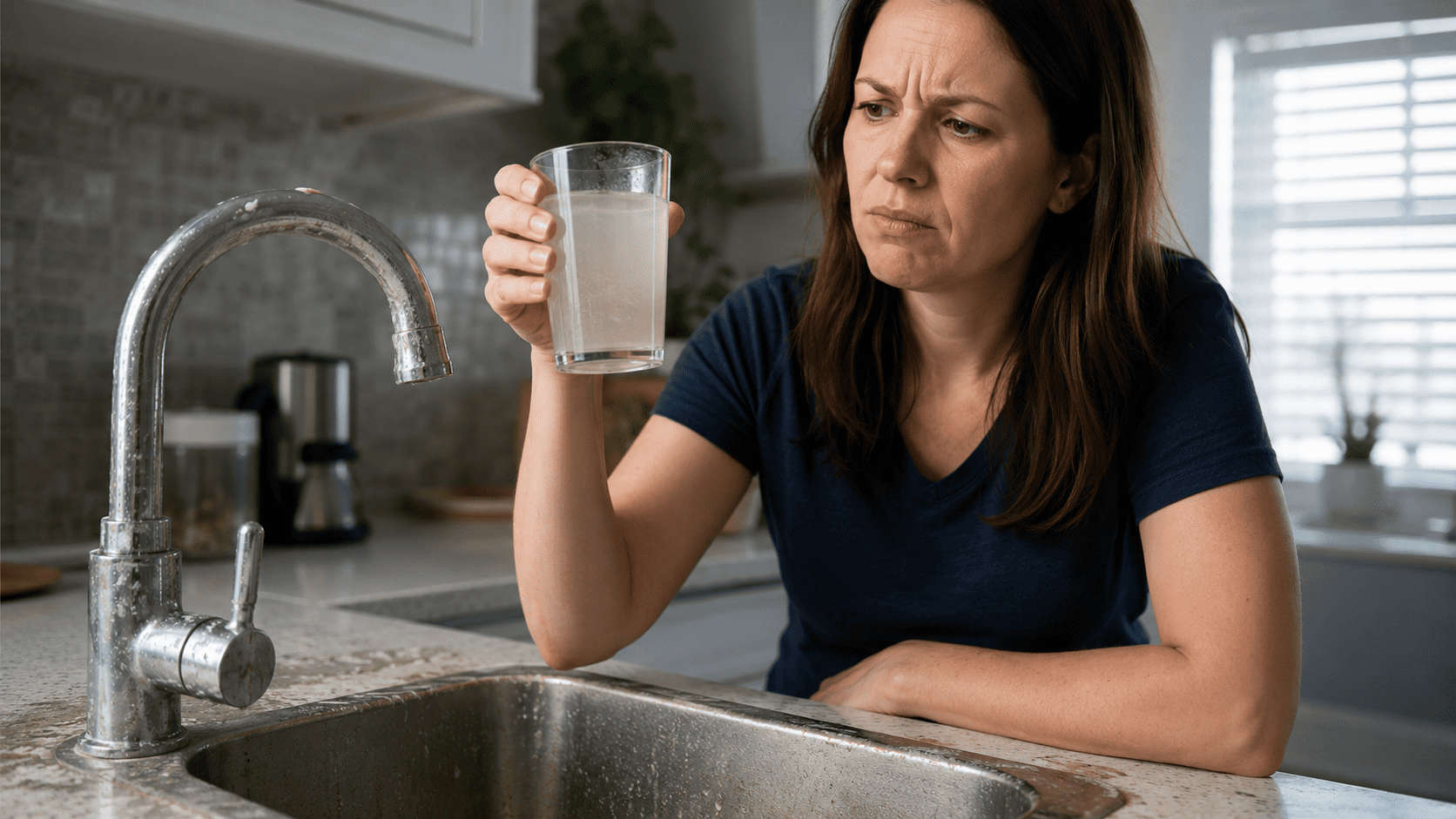
- Cloudy or discolored water: water that looks cloudy, yellow, brown, or rusty can point to sediment, pipe corrosion, or other water quality issues. If you fill a glass and stare at it longer than usual before drinking, that is already a sign worth checking.
- White buildup on faucets and showerheads: chalky residue is often linked to hard water minerals like calcium and magnesium. You clean the faucet, it looks fine, and a few days later the white crust is back like it pays rent.
- Stains on sinks, tubs, or toilets: orange, brown, blue-green, or white stains can reveal minerals, corrosion, or water chemistry problems. Those stains are not just “bathroom being bathroom”; they can be clues about what is moving through your water.
- Dry-feeling skin or dull hair after showering: minerals, chlorine, or other water issues can leave skin feeling tight and hair feeling rough or heavy. You step out of the shower expecting to feel clean, and somehow your skin feels like it wants an apology.
- Soap that does not lather well: poor water quality can make soap, shampoo, and cleaning products feel less effective, so you end up using more product for the same result. One extra pump becomes two, then three, and suddenly the soap is disappearing like it has somewhere better to be.
- Appliances working harder than usual: dishwashers, washing machines, and water heaters can lose efficiency when mineral buildup or sediment collects inside. If the dishwasher finishes and the glasses still look spotted, the appliance may not be the only one to blame.
- Laundry that feels stiff or looks dull: water quality can affect how detergent rinses and how fabrics feel after washing. Clothes come out “clean,” but the towel feels rough, the shirt looks faded, and you start questioning the detergent like it personally failed you.
If several of these signs appear at the same time, your home may need a closer water check. A water testing plumber can help identify what is actually in your water, whether the issue is hard water, sediment, corrosion, contaminants, or another problem affecting your plumbing and daily routines.
Why Water Quality Problems in Home Should Not Be Ignored
1. Health Implications
Poor water quality can affect more than taste. Depending on what is in the water, it may contribute to stomach discomfort, dry or irritated skin, or concerns around contaminants like lead, chlorine, bacteria, or sediment. These issues are not always visible right away, which is why water that “looks fine” can still deserve a closer look.
Some signs of poor water quality related to health and comfort may include:
- water with a strong chlorine, metallic, sulfur, or unusual smell;
- skin that feels dry or tight after showering;
- hair that feels dull, heavy, or rough;
- water that tastes strange even when it looks clear;
- stomach discomfort when harmful bacteria or contaminants are present;
- less confidence drinking water directly from the tap.
Regular water testing can help identify what is actually in your water, instead of guessing based on taste, smell, or that suspicious little pause after taking a sip.
2. Protecting Plumbing Systems
One of the most common water quality problems in home plumbing systems is mineral buildup. Hard water contains calcium and magnesium, and those minerals can collect inside pipes, faucets, showerheads, and fixtures over time.
That buildup can lead to:
- reduced water flow;
- clogged faucets or showerheads;
- white crust around fixtures;
- more frequent plumbing maintenance;
- higher risk of blockages;
- extra strain on pipes and water-using systems.
This is where understanding hard water vs soft water matters. Hard water carries more minerals that can build up inside your plumbing, while soft water has fewer hardness minerals and can be easier on pipes, fixtures, and appliances.
3. Improving Appliance Efficiency
Appliances that use water every day can also feel the impact of poor water quality. Dishwashers, washing machines, coffee makers, humidifiers, and water heaters may perform less efficiently when minerals, sediment, or buildup collect inside them.
Poor water quality can affect appliances by:
- making water heaters work harder to heat water;
- leaving mineral deposits inside dishwashers;
- reducing washing machine performance;
- creating cloudy glassware or dishes after cycles;
- shortening appliance lifespan;
- increasing maintenance or repair needs.
If an appliance seems to be working harder than usual, the issue may not be the appliance alone. The water feeding into it may be part of the problem, even if the water is acting very innocent about the whole thing.
4. Enhancing Water Taste and Odor
Water should not make you pause and think, “Why does this taste like that?” Strange taste or odor can be one of the clearest signs of poor water quality, especially if the change appears suddenly or keeps coming back.
Possible warning signs include:
- metallic taste;
- salty or chemical-like taste;
- chlorine smell;
- sulfur or rotten egg smell;
- musty odor;
- cloudy or discolored appearance.
A filtration system may help improve taste and odor depending on the cause, but the first step is knowing what is in the water. A water testing plumber can help identify whether the issue comes from minerals, sediment, plumbing, contaminants, or another source.
5. Environmental Benefits
Improving water quality at home can also support a more eco-friendly routine. When your tap water tastes better, smells better, and feels more reliable, you may depend less on bottled water. That can reduce plastic waste and make daily water use more sustainable.
Better home water quality may help reduce:
- plastic bottle use;
- packaging waste;
- transportation impact from bottled water;
- unnecessary product use;
- appliance waste from early replacements;
- energy waste caused by inefficient water-using systems.
It is a practical kind of environmental benefit: less plastic, fewer products, better appliance performance, and a home that relies more on its own water system instead of constantly buying around the problem.
Hard Water vs Soft Water
Understanding hard water vs soft water can make many home water issues easier to spot. Hard water contains higher levels of minerals, mainly calcium and magnesium. Soft water has fewer hardness minerals, which changes how it works with soap, plumbing, appliances, laundry, and daily cleaning.
Hard water is not always dangerous, but it can be frustrating. It can leave buildup, make soap feel weaker, and slowly affect the systems that use water every day. Soft water usually rinses more cleanly and is easier on fixtures, appliances, and household routines.
Here is the difference in a more practical way:
- Hard water can leave white buildup: those chalky spots around faucets, showerheads, and glassware often come from mineral deposits. You clean the faucet, it looks good for a moment, and a few days later the white crust is back again.
- Soft water works better with soap: soap, shampoo, detergent, and cleaners usually lather and rinse more easily, so you do not need to keep adding extra product just to get the same result.
- Hard water can affect appliances: water heaters, dishwashers, and washing machines may work harder when minerals build up inside. The appliance still runs, but it may be using more effort than it should.
- Soft water can make cleaning easier: fewer mineral spots and less soap scum can mean less scrubbing, fewer strong cleaners, and fewer moments of looking at the shower glass thinking, “I cleaned this yesterday.”
- Hard water can change how laundry feels: fabrics may come out stiff, dull, or rough when detergent does not rinse properly. Clean clothes should feel clean, not like they need a second round just to behave.
If you are seeing several signs of poor water quality, hard water may be part of the problem. But hardness is only one possible issue, which is why testing matters before choosing a solution.
How to Improve Water Quality at Home
Improving water quality starts with knowing the cause. A strange smell, hard water buildup, stains, or cloudy water may all need different solutions, so the best first step is usually testing.
Depending on the problem, common solutions may include:
- Water testing: helps identify hardness, sediment, contaminants, minerals, or other water quality issues before choosing a system. It gives you actual information, not just a guess based on how the water looks or smells.
- Water softener installation: useful when hard water is causing mineral buildup, soap scum, stiff laundry, fixture spots, or appliance strain.
- Filtration systems: can help improve taste, odor, sediment, chlorine concerns, or specific impurities, depending on the type of filter used. This matters when your tap water tastes or smells different enough that everyone in the house notices.
- Plumbing inspection: important when water problems may come from pipes, corrosion, leaks, pressure issues, or aging fixtures. Sometimes the water quality issue is connected to what is happening inside the plumbing.
- Regular maintenance: keeps softeners, filters, water heaters, and plumbing systems working properly, instead of waiting until the same water problems keep coming back.
Better water quality can make daily routines feel cleaner and more reliable, from drinking water and showers to laundry, dishes, and appliance performance. Once you know what is actually in your water, it becomes much easier to choose the right fix without wasting money on the wrong solution.
When to Call a Water Testing Plumber
A water testing plumber can help you understand what is actually happening with your water instead of guessing based on taste, smell, stains, or whatever your faucet decided to reveal this week.
You should consider calling a professional if you notice:
- Strange taste or odor: metallic, salty, chemical-like, sulfur, chlorine, or musty smells can point to different water quality concerns. If you take a sip and immediately wonder whether the water should taste that way, it is worth checking.
- Cloudy or discolored water: yellow, brown, rusty, or cloudy water may involve sediment, pipe corrosion, or another issue that needs inspection. Water should not make you pause before using it.
- Hard water buildup: white crust around faucets, showerheads, sinks, or glassware can be a sign of calcium and magnesium minerals. If your fixtures keep collecting buildup even after cleaning, testing can help explain why.
- Recurring stains: orange, brown, blue-green, or white stains can reveal minerals, corrosion, or water chemistry problems. Different colors can point to different causes, so it is better to check instead of guessing.
- Low or changing water pressure: sediment, scale, or plumbing issues can affect how water moves through your home. A shower should feel steady, not weaker every few weeks.
- Appliances acting differently: if your dishwasher, water heater, or washing machine seems less efficient, your water quality may be part of the story. Sometimes the appliance is working fine, but the water going into it is making the job harder.
- Uncertainty about the right system: if you are not sure whether you need a softener, filter, plumbing repair, or a combination, testing helps avoid buying the wrong solution.
A plumber can test your water, check the plumbing, and explain whether the issue is hard water, sediment, corrosion, contaminants, or something else. That way, you can choose the right fix instead of treating one symptom while the actual problem keeps affecting the rest of the home.
Your Home Deserves Water You Can Trust: Water Testing and Plumbing Services in Texas
At Global Cooling & Plumbing, we bring more than 14 years of experience helping Texas homeowners understand what is happening with their water, their plumbing, and the systems they use every day.
If your water looks different, smells unusual, leaves stains, affects your fixtures, or makes you wonder whether the problem is hard water, sediment, corrosion, or something else, our team can help you stop guessing. Water problems usually do not become less annoying by being ignored; they just get more comfortable living in your house.
We can help with water testing, plumbing repair, plumbing replacement, plumbing installation, water heater repair, water heater installation, tankless water heater repairs, tankless water heater installation, and faucet installations and repair.
Call Global Cooling & Plumbing at 830-992-7887 to ask about water testing, water quality, and plumbing services, or schedule your service directly through our website.