 SCHEDULE A SERVICE

Content:
- 1 Key Takeaways
- 2 Overview of the Benefits of Tankless Water Heater Systems
- 3 Benefits of Tankless Water Heater: Energy Savings, Space, and Everyday Comfort
- 4 Benefits of Tankless Water Heaters for Lower Energy Bills
- 5 Environmental Benefits of Tankless Water Heaters
- 6 Tankless Water Heater for Limited Spaces
- 7 Benefits of Tankless Water Heater Systems for Small Spaces
- 8 Common Myths About Tankless Water Heaters Debunked
- 9 FAQ About Benefits of Tankless Water Heater Systems
- 9.1 What are the main benefits of tankless water heater systems?
- 9.2 Is a tankless water heater better than a traditional water heater?
- 9.3 Do tankless water heaters really save energy?
- 9.4 Does a tankless water heater provide instant hot water?
- 9.5 Is a tankless water heater good for small or limited spaces?
- 9.6 How long does a tankless water heater last?
- 9.7 Does a tankless water heater need maintenance?
- 9.8 What should I consider before upgrading to a tankless water heater?
- 9.9 Can a tankless water heater handle multiple showers or appliances?
- 9.10 Who should install a tankless water heater?
- 10 Choose Global Cooling & Plumbing+ for Your Tankless Water Heater Upgrade
“Are the benefits of tankless water heater systems worth it if my current water heater still works?”
It is a fair question, especially for homeowners who are not dealing with a complete breakdown yet. Your traditional tank water heater may still be running, but your home may no longer use hot water the same way it did years ago. More showers in the morning, more laundry during the week, more guests, or longer daily routines can make the same old tank feel less prepared for the way your household actually lives now.
At Global Cooling & Plumbing+, we have helped many homeowners who were not planning a full water heater upgrade at first, until they understood how a tankless system could match the way their home actually uses hot water. In this guide, our expert technicians and experienced plumbers, backed by more than 14 years of experience, explain what you need to know about tankless water heaters before making the switch.
Key Takeaways
- The benefits of tankless water heater systems usually become more relevant when a traditional tank still works, but no longer matches the home’s daily hot water demand.
- A tankless water heater heats water on demand instead of keeping gallons of stored water hot throughout the day, which can help reduce standby energy loss.
- One of the biggest reasons homeowners consider the upgrade is steady hot water during busy routines, especially when showers, laundry, dishes, and guests all compete for the same system.
- Tankless water heaters can support better energy efficiency and long-term savings when the unit is properly sized, installed, and maintained.
- A tankless system can also free up space in garages, closets, laundry rooms, and utility areas because it does not require a bulky storage tank.
- The right tankless water heater depends on the home’s fuel type, plumbing layout, venting needs, hot water demand, available space, and future service access.
Overview of the Benefits of Tankless Water Heater Systems
| Tankless water heater benefit | What it means for your home | Why it matters |
| Hot water on demand | A tankless water heater heats water when someone opens a hot water tap, instead of depending on a limited tank of stored hot water. | It can support steadier hot water during busy routines, especially when showers, laundry, dishes, and guests all compete for the same system. |
| Less standby energy loss | The unit does not keep gallons of water heated all day. It works when hot water is needed. | This can help reduce wasted energy from reheating stored water between uses. |
| Better energy efficiency | Tankless systems are designed to heat water directly, and many models are built for high-efficiency performance. | Better efficiency can support lower energy use over time, depending on fuel type, usage habits, installation quality, and maintenance. |
| More usable space | Many tankless water heaters are compact and can be wall-mounted. | Garages, closets, laundry rooms, and utility areas can feel cleaner and easier to use without a bulky tank taking up floor space. |
| Better fit for changing household routines | A home may use more hot water now than it did years ago: more showers, more laundry, more guests, or longer daily routines. | A tankless system can be selected around today’s hot water demand instead of the way the home used to operate. |
| Longer equipment life | Many tankless models can last 20 years or more with proper installation and maintenance. | A longer lifespan can make the upgrade more valuable, especially compared with traditional tanks that often need replacement sooner. |
| Lower risk from tank-related leaks | Since there is no large storage tank, the home is not relying on gallons of heated water sitting inside the unit. | This can reduce certain risks tied to tank leaks or tank failure, especially in areas near flooring, walls, or stored items. |
| Eco-friendly water heating | By reducing standby energy loss and using energy only when hot water is needed, a tankless system can support a more efficient home. | Less wasted energy can help lower the home’s overall environmental impact and support a more eco-conscious water heating setup. |
| Better long-term planning | A tankless upgrade can be reviewed before the old water heater fails completely. | Homeowners can make a more informed decision instead of choosing a replacement in a rush. |
| Installation tailored to the home | Fuel type, venting, plumbing layout, electrical needs, wall space, unit size, and service access all shape the setup. | The system performs better when it is matched to the home instead of chosen only by size or price. |
| Maintenance that protects performance | Tankless systems still need flushing, descaling, inspections, and checks for mineral buildup. | Regular care helps protect water flow, efficiency, and equipment life over time. |
| Clearer expectations before switching | A tankless water heater is different from a traditional tank, especially in how it heats water and how installation is planned. | Understanding the system first helps homeowners avoid confusion around instant hot water, demand, sizing, and maintenance. |
Benefits of Tankless Water Heater: Energy Savings, Space, and Everyday Comfort
Continuous hot water for daily use
What happens when one person is showering, someone starts the dishwasher, and the laundry is already running?
In many homes, that is exactly when a traditional tank starts showing its limits. Once the stored hot water runs low, the next person waits, rushes, or gets the cold-shower surprise nobody requested.
A tankless system can provide a continuous flow of hot water when it is correctly sized for the home. It does not depend on a limited tank of preheated water. Instead, it heats water as needed, which can make daily routines feel smoother for households with steady hot water demand.
That said, “on demand” does not always mean hot water appears instantly at every faucet. The water still has to travel through the plumbing lines. But once it reaches the fixture, a properly selected tankless system can keep hot water flowing without waiting for a tank to refill.
Better energy efficiency
Why keep heating water when no one is using it?
That is one of the reasons homeowners pay attention to the benefits of tankless water heater systems. A traditional water heater keeps stored water hot even when the house is quiet, everyone is asleep, or nobody has touched hot water for hours.
A tankless system avoids much of that standby heating because it only heats water when there is demand. This can support tankless water heater energy savings, especially in homes where hot water use changes throughout the day.
For homeowners, that can mean:
- Less wasted energy from keeping stored water hot.
- Better efficiency during normal household routines.
- Lower gas or electricity use over time, depending on the system and usage.
- A more modern way to heat water without constantly reheating a full tank.
The savings can depend on household size, fuel type, installation quality, and how often hot water is used. When the system does not need to keep a tank hot all day, there is less unnecessary energy use built into the routine.
Longer system lifespan
What if the water heater upgrade was about today’s hot shower and avoiding another full replacement too soon?
A tankless water heater can offer long-term value because many units can last 20 years or more with proper installation and maintenance. That is longer than many traditional tank water heaters, which often need replacement sooner.
A longer-lasting system may reduce how often the home needs a full replacement, which can make the investment more attractive over time. This is one of the benefits of tankless water heater systems that connects daily comfort with longer-term planning.
Regular maintenance still matters. Tankless systems are not “install it and forget it” appliances. They may need flushing, descaling, inspections, and professional care, especially in areas where mineral buildup can affect performance. With the right care, the longer lifespan can become a strong reason to consider the upgrade.
Space-saving design
What could your home do with the space currently taken by a bulky water heater tank?
In some homes, the answer may be “not much.” In others, that floor space matters. A traditional tank can take over part of a garage, closet, utility room, or laundry area, especially in homes where storage is already a daily negotiation.
A tankless system is usually more compact and can often be mounted on a wall, which makes it useful for homeowners looking for a tankless water heater for small spaces. That can help in:
- Smaller homes.
- Utility rooms.
- Garages.
- Closets.
- Laundry areas.
- Remodels where space is being reworked.
- Rental properties where every usable square foot matters.
This benefit goes beyond making the area look cleaner. It can make the home easier to organize, especially when the old tank has been occupying a corner that could finally serve a better purpose.
Lower risk of tank-related water damage
What happens if a traditional tank starts leaking while no one notices right away?
That is one of the quieter reasons some homeowners compare tankless vs traditional water heater options. Traditional tank water heaters store a large volume of water. If the tank leaks or fails, that stored water can create damage around the unit and sometimes beyond it.
A tankless water heater does not store hot water in the same way, which can reduce certain risks linked to tank leaks or tank failure. This does not mean tankless systems can never have problems, but it does remove the issue of having a large tank full of water sitting inside the home.
For homeowners, the upgrade can reduce one more source of stress, especially if the current tank is older, showing signs of wear, or located near finished flooring, walls, storage, or other areas where water damage would be expensive to handle.
Benefits of Tankless Water Heaters for Lower Energy Bills
Less standby energy loss
Have you ever thought about what your water heater is doing when no one is showering, washing dishes, or running laundry?
With a traditional tank, hot water sits inside the unit waiting to be used. As that water cools, the system has to heat it again. That repeated cycle is called standby energy loss, and it can quietly add to monthly utility costs.
A tankless water heater avoids much of that waste because it does not keep a large tank of water hot all day. It starts heating when someone opens a hot water tap.
This can help reduce:
- energy used to reheat stored water;
- utility costs tied to standby heating;
- waste from keeping hot water ready when nobody needs it;
- extra cycling from a system that keeps working between uses.
For homeowners comparing the benefits of tankless water heater systems, this is one of the easiest advantages to understand: less stored hot water means less energy spent keeping unused water warm.
Lower gas or electricity use
What changes on the bill side?
Since a tankless system heats water on demand, it may use less gas or electricity over time, depending on the model, fuel type, household size, and hot water habits. A home with heavy daily use may notice the difference differently than a smaller household, but the system is designed to work when hot water is needed, not all day.
This can help reduce energy waste from routines like:
- keeping stored water hot overnight;
- reheating water while no one is home;
- recovering after several showers;
- maintaining a tank temperature between uses;
- heating more water than the home needs at that moment.
That is why many homeowners look at tankless water heater energy savings when deciding whether to replace an older unit. The upgrade can support lower operating costs, especially when the system is sized and installed correctly.
High-efficiency performance
Can a tankless water heater really perform more efficiently than a traditional unit?
In many cases, yes. Tankless systems are built to heat water directly, and many models are designed with high-efficiency performance in mind. Some tankless units can operate at over 90% efficiency, which means more of the energy used goes toward heating water instead of being lost through the system.
Efficiency can depend on:
- the model selected;
- fuel type;
- installation quality;
- household hot water demand;
- water usage habits;
- whether the system is sized correctly for the home.
A unit that is too small, poorly placed, or installed without the right setup can create problems even if the technology itself is efficient. The system has to match the home, the number of fixtures, the expected demand, and the way the household uses hot water.
When that part is handled well, high-efficiency performance becomes one of the practical benefits of tankless water heater systems.
Long-term savings over time
What about the initial cost?
A tankless water heater can cost more upfront than a traditional tank unit, especially if the home needs changes to venting, electrical work, gas lines, or placement. That higher installation cost is one reason some homeowners hesitate.
But the cost conversation should include what happens after installation. A traditional water heater may last up to 15 years, while a tankless model can last 20 years or more with proper maintenance. That longer lifespan can reduce how often the home needs a full replacement and help homeowners view the system as a long-term investment, not just an upfront expense.
The savings can come from several places:
- reduced standby energy loss;
- lower gas or electricity use;
- fewer replacement cycles over time;
- better efficiency during daily hot water use;
- less wasted energy compared with constantly reheating stored water.
The money side goes beyond the first invoice. It includes monthly use, maintenance, lifespan, and whether the investment gives the home a more efficient way to handle hot water year after year.
Environmental Benefits of Tankless Water Heaters
Lower energy consumption
A house can be completely quiet at night and still have a traditional water heater working in the background, reheating stored water nobody is using.
That constant reheating can waste energy through standby energy loss. A tankless system works differently because it heats water on demand, reducing the energy used to keep unused water warm.
This can help lower:
- standby energy loss from stored hot water;
- unnecessary gas or electricity use;
- energy waste during hours when no one needs hot water;
- greenhouse gas emissions tied to higher energy consumption.
For homeowners looking at the benefits of tankless water heater systems, this is where efficiency starts to support a more eco-friendly home. Less wasted energy can mean lower utility use and a smaller environmental load over time.
Less water waste
How much water goes down the drain while someone waits for it to warm up?
With the right setup, a tankless water heater can help reduce wasted water during daily routines. Since the system heats water when there is demand, it can support a more efficient hot water experience, especially when the unit is properly sized and installed for the home.
This can help reduce water waste in moments like:
- waiting for the shower to warm up;
- running the kitchen faucet before washing dishes;
- using hot water for laundry or cleaning;
- letting taps run longer than needed because the system is slow to respond.
That shows up in small daily routines: the shower running while someone looks for a towel, the kitchen faucet left open before dishes, or the laundry room tap running longer than expected. For eco-conscious homeowners, using less water in those repeated moments can be part of a greener way to manage the home.
Lower carbon footprint
Water heating uses energy every day, even though most homeowners only notice the system when something feels off.
When a water heater uses less gas or electricity to produce hot water, it can also reduce the emissions connected to that energy use. Tankless water heaters are designed to avoid constantly reheating a storage tank, which can help lower the home’s overall carbon footprint.
This environmental benefit can come from:
- reduced energy consumption;
- less standby heating;
- fewer wasted heating cycles;
- better efficiency compared with many traditional tank systems;
- lower greenhouse gas emissions over time.
This is one reason eco-conscious homeowners often consider tankless systems. The same efficiency that supports tankless water heater energy savings can also support a cleaner, less wasteful way to handle hot water at home.
Durable and sustainable design
What makes a water heater design more sustainable over time?
Part of it is durability. A traditional water heater may last up to 15 years, while many tankless models can last 20 years or more with proper maintenance. That longer lifespan can reduce how often the system needs to be replaced, which also reduces waste tied to old units being removed, discarded, and replaced.
This can help reduce:
- replacement waste from old water heaters;
- landfill impact from discarded units;
- demand for manufacturing new equipment more often;
- long-term material waste connected to shorter system lifespans.
This is one of the environmental benefits of tankless water heater systems that goes beyond monthly energy use. A longer-lasting system can make the investment more sustainable over time, especially when it receives proper maintenance, flushing, descaling, and professional inspections.
Renewable energy compatibility
Some homeowners are already thinking beyond one appliance. Solar panels, lower energy use, efficient HVAC, better insulation, and smarter water heating can all become part of the same green home improvement plan.
Certain tankless water heater systems may be compatible with renewable energy sources, such as solar power, depending on the model, fuel type, home setup, and installation requirements.
That does not mean every tankless system automatically becomes a solar-powered solution. The setup has to be reviewed properly. A professional can look at the home’s energy source, water heating demand, installation location, electrical or gas requirements, and whether renewable energy can realistically support the system.
This can be useful for homeowners who want to explore:
- solar-compatible water heating options;
- lower reliance on traditional energy sources;
- more efficient hot water production;
- an eco-friendly water heating setup that fits broader home efficiency goals.
For homeowners comparing the benefits of tankless water heater systems, renewable energy compatibility can be part of the conversation when the home’s setup allows it. It adds another possible layer to the environmental value of going tankless.
Tankless Water Heater for Limited Spaces
How tankless water heaters work
A tankless water heater, also called an on-demand water heater, heats water directly when someone opens a hot water tap. There is no large storage tank sitting in the garage, closet, laundry area, or utility room waiting to keep gallons of water hot all day.
The system starts working when hot water is requested. Cold water moves through the unit, the heating element or burner activates, and hot water travels through the home’s plumbing to the shower, sink, washing machine, or appliance being used.
In a house with little room to spare, every corner already has a job. A tankless design takes up less physical room because it works through direct heating instead of stored water. It can also reduce standby energy loss from keeping a full tank hot between uses.
That setup can help with:
- hot water on demand;
- less floor space taken by equipment;
- fewer storage tank limitations;
- reduced standby energy loss;
- a more compact water heating layout.
Picture a laundry area where the water heater tank sits beside the washer, a storage shelf, and the broom that never seems to fit anywhere. A tankless system changes the shape of that space because the unit can often move off the floor and onto a wall.
Why the no-tank design helps in limited spaces
Small spaces usually fill up little by little. First, one box stays in the garage “just for now.” Then cleaning supplies move into the laundry area. Then the utility closet becomes a place where everything fits, but nothing is easy to reach.
A traditional water heater tank adds to that problem because it needs floor space, clearance, and access. It can make a tight area feel even tighter, especially in homes where the garage, utility room, closet, or laundry area already has too many jobs.
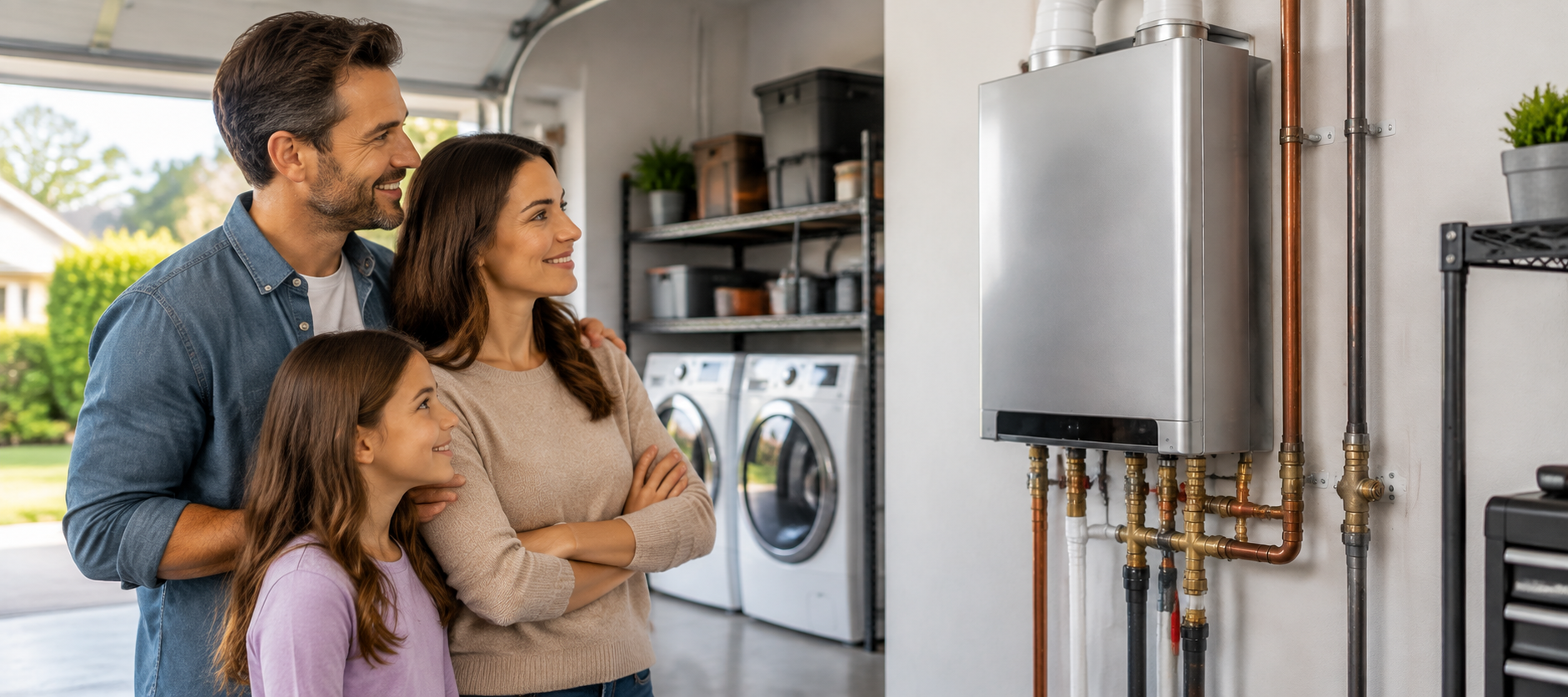
A tankless water heater removes the large storage tank from the equation. Many models are compact and can be wall-mounted, which can help open up floor space and make the area easier to use.
A tankless water heater for small spaces can make sense in:
- smaller homes with limited storage;
- garages with boxes, tools, and equipment already competing for room;
- utility rooms with narrow walking space;
- closets where a large tank makes access awkward;
- laundry areas that feel crowded;
- remodels where the layout needs more flexibility;
- rental properties where usable space affects daily comfort.
“Where are we supposed to put this?”
That question comes up fast when the house has no extra room to waste. A compact water heater setup can help one crowded corner feel more workable, especially when the old tank has been shaping the entire layout for years.
How tankless water heater installation works in tight areas
A compact unit still needs a smart installation plan. The best spot is the one that gives the system enough room to operate, connect properly, meet venting or electrical requirements, and stay accessible for future service.
Before installing a tankless water heater in a tight area, the home should be reviewed for:
- fuel type, such as gas or electric;
- unit size;
- hot water demand;
- installation location;
- venting requirements;
- electrical needs;
- plumbing layout;
- wall space;
- clearance around the unit;
- access for maintenance;
- how many fixtures may need hot water at the same time.
A small home, a remodel, a rental property, and a house with several bathrooms may all need different recommendations. The unit may be compact, but it still has to match the home’s hot water habits.
Maybe the garage wall looks like the perfect spot, until venting becomes the problem. Maybe the laundry closet has enough room for the unit, but not enough access for service. Maybe the home needs an electric model, or maybe gas makes more sense based on the current setup.
The installation should look at the space as a whole: the wall, the system requirements, service access, and the way the household uses hot water every day.
What maintenance looks like after installation
A tankless water heater can be easier to place in a smaller home, but it still needs regular maintenance. The unit should remain accessible after installation, especially if it needs flushing, descaling, inspection, or service later.
Maintenance may include:
- periodic flushing;
- descaling to reduce mineral buildup;
- checking for signs of wear or malfunction;
- reviewing system performance;
- inspecting connections;
- keeping the unit accessible for service;
- scheduling professional maintenance when needed.
Mineral buildup can affect performance over time, especially in areas with harder water. If the unit is installed in a tight closet or crowded utility space, access becomes part of the maintenance plan from the beginning.
The better setup is the one that saves space without turning every future service visit into a furniture-moving event. Nobody wants to empty half a closet just so someone can reach the water heater.
A tankless system works best when the installation leaves room for both daily use and long-term care. Compact should still mean serviceable.
Before looking at the bigger benefits of tankless water heater systems, it helps to understand this first: the design changes how the equipment fits into the home. Once the tank is gone, the conversation can move from “Where do we put this thing?” to what the system can actually do for comfort, energy use, and daily hot water.
Benefits of Tankless Water Heater Systems for Small Spaces
Compact wall-mounted design
In a smaller home, every corner gets used twice. The garage holds storage bins, tools, laundry supplies, holiday boxes, and whatever did not fit inside the house. Then there is the traditional water heater tank, sitting on the floor and taking up space no one can really use.
A tankless water heater changes that layout. Since it heats water on demand and does not need a large storage tank, the unit is usually much more compact. Many models can be mounted on a wall, which helps clear floor space in areas that already feel tight.
A tankless water heater for small spaces can work well in places like:
- smaller homes with limited storage;
- garages where every foot of floor space is already claimed;
- utility rooms that feel crowded before anything else is added;
- laundry areas with narrow walking room;
- closets where a full tank makes access awkward;
- remodels where the layout needs more flexibility;
- rental properties where usable space affects daily comfort.
The change is easy to picture. A bulky tank leaves one more obstacle to work around. A compact wall-mounted unit can make the same area feel cleaner, easier to access, and less crowded.
Better fit for small homes or tight utility areas
“I just need somewhere to put this.”
That sentence comes up often in homes with limited space. A box gets moved from the laundry room to the garage. Cleaning supplies get tucked behind something else. The utility area slowly becomes a place where everything fits badly.
A traditional water heater can make that worse because it needs floor space, clearance, and access. A tankless system gives homeowners another option. Since it does not rely on a large tank of stored hot water, it can fit into tighter areas while still supporting daily hot water use.
For small homes and tight utility spaces, that can mean:
- more usable storage room;
- easier access around the water heater;
- less visual clutter in the equipment area;
- more flexibility during remodels;
- a cleaner setup in garages, closets, or laundry rooms;
- fewer layout compromises in areas that already feel packed.
This is one of the benefits of tankless water heater systems that feels practical quickly. One crowded corner gets easier to use, and the equipment stops dictating how the whole area has to be arranged.
Installation factors to review before choosing a unit
A compact unit still needs the right setup. Before choosing a tankless system, the home should be reviewed so the equipment matches the space and the household’s hot water demand.
The right installation can depend on:
- fuel type, such as gas or electric;
- unit size;
- hot water demand;
- installation location;
- venting requirements;
- electrical needs;
- plumbing layout;
- water quality;
- mineral buildup risk;
- how many fixtures may need hot water at the same time.
A tankless unit can look like the perfect solution for a tight area, especially when the old tank has been eating up floor space for years. Still, the unit has to support the way the home uses hot water. A small household, a rental property, a remodel, and a family with several bathrooms may all need different recommendations.
The setup should give the unit enough space to work properly, allow safe access for service, and support daily hot water use without creating new access or performance issues.
Maintenance and cost considerations
In a small utility area, the cheapest or smallest unit is not always the smartest choice. A tankless water heater may look like the perfect fix because it frees up floor space, but the setup still has to make sense for service, airflow, venting, water demand, and long-term access.
What happens if the unit saves space on day one, but becomes hard to reach when it needs service?
A tight installation can create problems later if the unit is hard to reach, difficult to flush, or placed without enough room for proper service. Tankless systems still need regular care to keep working efficiently, especially in areas where mineral buildup can affect performance.
Regular maintenance may include:
- periodic flushing;
- descaling to reduce mineral buildup;
- checking for signs of wear;
- reviewing system performance;
- making sure the unit stays accessible for service;
- scheduling professional inspections when needed.
The upfront cost can also change depending on the home. Fuel type, installation location, venting, electrical work, plumbing adjustments, water quality, and unit size can all affect the final price.
So the cost conversation should include more than the equipment itself. In a small home, the better investment is a system that saves space without creating new access issues, supports the household’s hot water demand, and still delivers the benefits of tankless water heater systems over time.
Common Myths About Tankless Water Heaters Debunked
Myth: Tankless water heaters provide instant hot water
“Wait, I thought tankless meant hot water right away.”
That is a common reaction, especially when someone hears the phrase “on-demand hot water.” A tankless water heater does heat water when there is demand, but the hot water still has to travel through the plumbing lines before it reaches the shower, sink, or appliance.
So there may still be a short delay at the faucet, depending on:
- the distance between the unit and the fixture;
- the home’s plumbing layout;
- the system size;
- the flow rate at the faucet or shower;
- how the unit was installed.
A tankless system can provide a steady hot water supply when it is properly sized. That is one of the benefits of tankless water heater systems, but “on-demand” should be understood as how the unit heats water, not a promise that every faucet gets hot water in one second.
Myth: Tankless water heaters are too expensive to install
The estimate arrives, someone looks at the number, and the first reaction is usually silence.
A tankless water heater can cost more upfront than a traditional tank unit, especially if the home needs updates to venting, electrical work, gas lines, plumbing, or placement. That higher installation price can make the decision feel bigger than expected.
Still, the installation price is only one part of the full picture. A tankless system can help reduce standby energy loss, support lower utility use, take up less space, and last 20 years or more with proper maintenance.
The final cost can depend on:
- fuel type;
- unit size;
- installation location;
- venting needs;
- electrical or gas requirements;
- plumbing adjustments;
- household hot water demand.
That is why many homeowners compare the upfront price with the system’s long-term value: energy use, lifespan, maintenance needs, available space, and the way the home uses hot water every day.
Myth: Tankless systems cannot handle high demand
Picture the usual evening rush: one person showers, someone starts the dishwasher, laundry is running, and another person asks, “Is there still hot water?”
A tankless system can handle strong demand when it is selected for the household’s actual use. The key is sizing. A unit that is too small can struggle, especially in homes with multiple bathrooms, frequent guests, or several fixtures running close together.
High hot water demand can come from:
- back-to-back showers;
- laundry and showers running close together;
- dishwashing during evening routines;
- multiple bathrooms;
- larger households;
- guest-heavy homes or rental properties.
A properly sized tankless water heater can provide continuous hot water for many homes. The system should be selected based on flow rate, temperature rise, number of fixtures, and daily hot water habits.
Myth: Tankless water heaters require no maintenance
A tankless water heater may take up less room, but it still needs care.
Mineral buildup can affect performance over time, especially in areas with harder water. Regular maintenance helps protect efficiency, water flow, and system lifespan.
Maintenance may include:
- annual or periodic flushing;
- descaling to reduce mineral buildup;
- checking filters;
- inspecting connections;
- reviewing system performance;
- scheduling professional service when needed.
A tankless model can last 20 years or more with proper maintenance. That long service life depends on installation quality, water conditions, usage, and regular care.
Myth: Tankless water heaters are not energy efficient
Some homeowners look at the installation price and miss the daily operating difference.
A traditional tank water heater keeps stored water hot throughout the day, even during hours when no one is using it. A tankless system heats water when there is demand, which can reduce standby energy loss and support tankless water heater energy savings over time.
Energy efficiency can depend on:
- the model selected;
- fuel type;
- installation quality;
- hot water usage;
- system sizing;
- maintenance;
- household demand.
Many tankless models are designed for high-efficiency performance, with some units operating at over 90% efficiency. When the system fits the home, energy efficiency becomes one of the strongest benefits of tankless water heater systems.
FAQ About Benefits of Tankless Water Heater Systems
What are the main benefits of tankless water heater systems?
The main benefits of tankless water heater systems include hot water on demand, reduced standby energy loss, better energy efficiency, more usable space, longer equipment life, and lower risk from tank-related leaks. The value depends on the home’s hot water demand, fuel type, installation setup, and maintenance.
Is a tankless water heater better than a traditional water heater?
A tankless water heater can be a better option for homes that want steady hot water, better energy use, and a more compact setup. A traditional tank may still work for some homes, but it stores a limited amount of hot water and keeps that water heated throughout the day.
Do tankless water heaters really save energy?
Yes, tankless water heaters can support energy savings because they heat water when it is needed instead of keeping gallons of stored water hot all day. Actual tankless water heater energy savings depend on the unit, fuel type, household usage, installation quality, and regular maintenance.
Does a tankless water heater provide instant hot water?
A tankless water heater heats water on demand, but that does not always mean hot water reaches the faucet instantly. The water still has to travel through the plumbing lines, so the wait time can depend on the home’s layout, the distance from the unit, and the fixture being used.
Is a tankless water heater good for small or limited spaces?
Yes, a tankless water heater can work well in homes with limited space because many models are compact and wall-mounted. This can help free up floor space in garages, closets, laundry rooms, and utility areas where a traditional tank takes up too much room.
How long does a tankless water heater last?
Many tankless water heaters can last 20 years or more with proper installation and maintenance. Regular flushing, descaling, inspections, and care for mineral buildup help protect performance and extend the system’s service life.
Does a tankless water heater need maintenance?
Yes, tankless water heaters still need maintenance. Flushing, descaling, checking for mineral buildup, inspecting connections, and reviewing system performance can help keep the unit working efficiently, especially in areas with harder water.
What should I consider before upgrading to a tankless water heater?
Before upgrading, homeowners should review hot water demand, fuel type, unit size, plumbing layout, venting needs, electrical requirements, available space, and service access. A professional review helps make sure the tankless system fits the way the home actually uses hot water.
Can a tankless water heater handle multiple showers or appliances?
A properly sized tankless water heater can support multiple hot water uses, but sizing matters. The unit should match the home’s flow rate, temperature rise, number of bathrooms, and the possibility of showers, laundry, and dishes running close together.
Who should install a tankless water heater?
A tankless water heater should be installed by licensed technicians or experienced plumbers who understand fuel type, venting, plumbing connections, electrical needs, sizing, and service access. Proper installation helps the system perform safely and efficiently from the start.
Choose Global Cooling & Plumbing+ for Your Tankless Water Heater Upgrade
“Can we move this somewhere else?”
If your old water heater tank is taking over the garage, closet, laundry room, or utility area, a tankless system may be the upgrade your home needs. Global Cooling & Plumbing+ helps homeowners choose and install dependable tankless water heaters that fit their space, hot water demand, and daily routine.
With more than 14 years of experience, our licensed technicians and experienced plumbers know how to review the layout, fuel type, venting, plumbing connections, and service access before installation. You also get clear recommendations and transparent pricing, so you know what to expect before the work begins.
Looking for a reputable team to handle your tankless water heater upgrade? Contact us at Global Cooling & Plumbing+ today to schedule a consultation: +1-830-992-7887.
Prefer to schedule online? Visit our website and click to request your tankless water heater consultation.