 SCHEDULE A SERVICE

Content:
- 1 Key Takeaways
- 2 Hard Water Symptoms in Home
- 3 Water Softener Upgrade Signs
- 4 When to Replace a Water Softener
- 5 Do You Need a Water Softener?
- 6 Schedule Your Water Softener Service Before Hard Water Keeps Making Home Care Harder
- 7 FAQ About Signs You Need a Water Softener
- 7.1 How do I know if I need a water softener?
- 7.2 Will a water softener remove existing hard water buildup?
- 7.3 How long does it take to notice a difference after installing a water softener?
- 7.4 What are the most common signs of hard water?
- 7.5 Can hard water damage appliances?
- 7.6 Should I get my water tested before installing a water softener?
Have you ever ignored a home problem simply because you got used to it? That is what often happens with hard water. At first, it may feel like a small inconvenience, the kind of thing you learn to live with, until those little annoyances start adding up and affecting more parts of your home than you expected. Below, we will walk through the main signs you need a water softener, so you can recognize the problem before it keeps making your daily routine harder than it needs to be.
Key Takeaways
- Hard water can feel easy to ignore at first, especially when the signs seem small or disconnected, but those little problems can start affecting your laundry, fixtures, appliances, cleaning routine, skin, and hair.
- Common signs you need a water softener include stiff laundry, soap that does not rinse well, white mineral buildup, cloudy dishes, dry-feeling skin, dull hair, lower water pressure, and appliances working harder than they should.
- A water softener can help reduce mineral buildup at the source, instead of making you fight the same hard water problems again and again with extra detergent, stronger cleaners, or more scrubbing.
- Softened water can make daily home care easier, from washing clothes and cleaning surfaces to protecting plumbing and improving how water-using appliances perform.
- Hard water can quietly increase household costs, especially if you are buying more detergent, using more cleaning products, scheduling more maintenance, or replacing appliances sooner than expected.
- The more signs you notice at once, the more important it is to act, because hard water usually affects several parts of the home before homeowners realize the same issue is behind them.
- If several hard water symptoms are happening at the same time, it may be time to have your water checked and see whether a whole-home water softener makes sense for your home.
Hard Water Symptoms in Home
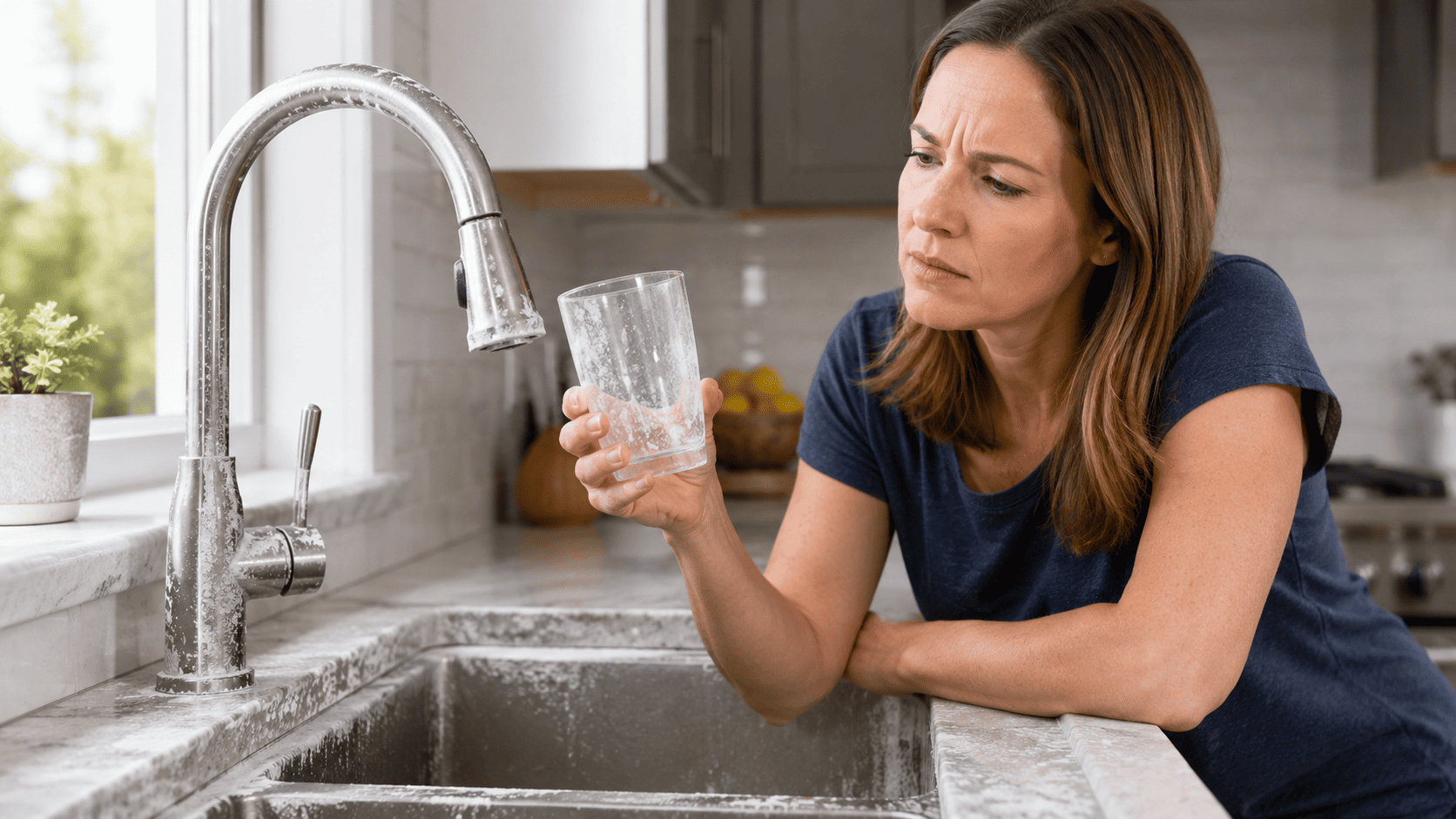
Hard water can be tricky because it rarely shows up as one big obvious problem. It usually appears as a group of small annoyances around the house: soap that feels harder to rinse, dishes that never look fully clear, laundry that comes out rough, faucets that need cleaning too often, or appliances that seem to work harder than they should.
At first, each issue can feel separate. Maybe the detergent is not strong enough. Maybe the dishwasher needs cleaning. Maybe the towels are just old. But when several of these problems keep showing up at the same time, they may be signs you need a water softener, especially if hard water is affecting your laundry, fixtures, appliances, and daily cleaning routine.
Common hard water symptoms in the home include:
- White chalky buildup on faucets and showerheads: this is usually limescale, caused by calcium and magnesium minerals collecting on surfaces.
- Cloudy spots on dishes and glassware: if your glasses come out of the dishwasher looking foggy or spotted, hard water minerals may be sticking around after the rinse cycle.
- Soap that does not lather well: hard water can make soaps, shampoos, and cleaning products feel less effective, which often leads people to use more product.
- Soap scum on tubs, sinks, and tiles: when hard water reacts with soap, it can leave behind residue that clings to surfaces and makes cleaning feel harder than it should.
- Stiff, rough, or faded laundry: one of the most common hard water laundry problems is clothing that never feels fully soft or fresh, even when you wash it correctly.
- Towels that feel scratchy: towels are often one of the first places homeowners notice hard water, since they get washed often and collect residue faster.
- Dry-feeling skin and dull hair: mineral residue can stay on skin and hair after showering, making them feel less clean, less smooth, or more irritated.
- Lower water pressure: mineral buildup can collect inside fixtures or plumbing lines, reducing water flow over time.
- Appliances working harder: water heaters, dishwashers, washing machines, and coffee makers can lose efficiency when scale builds up inside.
- Higher cleaning and maintenance costs: hard water can make you use more sprays, descalers, detergent, and scrubbing time just to get results that should not require a full household negotiation.
If several of these symptoms are happening at the same time, your home may be dealing with hard water at the source. A whole-home softener can help reduce those minerals before they reach your laundry, fixtures, appliances, and plumbing, making daily home care feel easier, cleaner, and less expensive to manage.
Water Softener Upgrade Signs
If you are looking for signs you need a water softener, pay attention to the small changes that start showing up around your home. A water softener can keep running for years, but its performance can start fading little by little. First, your laundry feels a bit rough again. Then the shower glass gets cloudy faster. Then your faucet starts collecting those white spots you thought you had already handled. Very bold comeback from hard water, honestly.
These early signs are worth paying attention to because they can point to different needs: maintenance, a system adjustment, resin replacement, resizing, or a full upgrade. The important thing is to catch the change before hard water starts affecting more parts of your home.
Common water softener upgrade signs include:
- Your laundry feels stiff again: if towels, sheets, or clothes are starting to feel rough, dull, or less fresh after washing, your system may not be reducing hard water minerals as effectively as before. A good water softener for laundry should help fabrics feel cleaner and softer, not like they trained for a cardboard competition.
- You are using more detergent than before: when softened water is working well, detergent usually dissolves and rinses more easily. If you are adding more soap, running extra rinse cycles, or still seeing residue, your system may need attention. This is also where a better-performing softener can help reduce detergent usage hard water tends to increase.
- Hard water stains are coming back: white spots on faucets, showerheads, dishes, or glass doors can mean calcium and magnesium are getting through again.
- Your water does not feel as soft as it used to: if showers leave your skin feeling tight, your hair feels rough, or soap does not lather the same way, the system may not be performing at its usual level.
- Your household water use has changed: more people at home, more laundry, more showers, or more dishes can make an older or undersized softener struggle.
- You are noticing more hard water symptoms in different areas: laundry, fixtures, appliances, and cleaning problems showing up at the same time usually means the issue is not isolated.
If these signs you need a water softener keep appearing, it is worth having the system checked before small symptoms turn into bigger home maintenance problems. Sometimes the solution is a simple service. Sometimes your home needs a stronger or newer system. Either way, acting early can help you avoid more hard water laundry problems, appliance strain, and cleaning frustration later.
When to Replace a Water Softener
Replacing a water softener becomes a different conversation. This is not about one rough towel or one stubborn faucet spot. This is the stage where the system is older, repairs are becoming too frequent, performance keeps dropping, and the unit may no longer make sense for the way your home uses water.
A water softener may need replacement if:
- It is more than 10 to 15 years old: many systems last around this range, depending on water quality, usage, and maintenance. If your unit is already in that age zone and the results are fading, replacement may be more practical than another temporary fix.
- Repairs are becoming frequent: one repair can happen. Several repairs in a short period start to feel like the system has discovered a new hobby, billing you.
- It no longer solves the same problems after maintenance: if you already serviced the system and still deal with stiff laundry, scale buildup, dry-feeling skin, or weak performance, the unit may be past its best years.
- The system is too small for your household now: if your family has grown or your water use has increased, the old softener may not have enough capacity to keep up.
- Parts are worn, damaged, or hard to replace: issues with the resin bed, control valve, brine tank, or regeneration cycle can make repairs more expensive or less reliable.
- Repair costs are getting too close to replacement costs: if each repair feels like you are slowly buying a new system one invoice at a time, it may be time to compare the numbers.
- Your appliances and plumbing are still showing scale issues: when a softener can no longer protect water heaters, dishwashers, washing machines, faucets, and showerheads from mineral buildup, the whole home starts paying for it.
At that point, replacing the system can be the cleaner decision. A new water softener can help restore the benefits you expected in the first place: softer laundry, better rinsing, fewer hard water stains, more protected appliances, and a home that feels easier to maintain without constantly fighting mineral buildup in every corner.
Do You Need a Water Softener?
If you are seeing several of these issues at the same time, they may be signs you need a water softener, especially if the problems keep coming back after cleaning, washing, or using extra products.
| If You Notice… | It Could Mean… | Why It Matters | What to Do Next |
| Stiff laundry and rough towels | Hard water minerals may be staying on fabrics after washing. | Clothes can feel less fresh, towels can feel scratchy, and detergent may not rinse properly. | Check if the issue keeps happening even when you change detergent or wash settings. |
| More detergent or soap use | Calcium and magnesium may be making products less effective. | You may spend more on detergent, cleaners, shampoo, or soap without getting better results. | Track how much product you are using and consider testing your water hardness. |
| White buildup on faucets or showerheads | Limescale may be forming from mineral deposits. | Buildup can affect appearance, water flow, and fixture performance. | Clean the buildup and see how quickly it returns. Fast buildup is a strong clue. |
| Cloudy dishes or glassware | Hard water spots may remain after the rinse cycle. | Your dishwasher may be working, but minerals can still leave dishes looking dirty. | Check whether spots appear after every dishwasher cycle. |
| Dry-feeling skin or dull hair | Mineral and soap residue may not be rinsing away fully. | Showers can leave you feeling less clean, even when you are using good products. | Notice if your skin or hair feels different after showering somewhere with softer water. |
| Soap scum on tubs, sinks, or tiles | Hard water may be reacting with soap and leaving residue behind. | Cleaning takes more effort, more sprays, and more scrubbing than it should. | Watch whether soap scum comes back quickly after cleaning. |
| Appliances working harder | Scale may be building up inside water heaters, dishwashers, or washing machines. | Appliances can lose efficiency, use more energy, and wear out sooner. | Review maintenance issues and ask a professional to check for scale buildup. |
| Lower water pressure | Mineral deposits may be restricting flow in fixtures or plumbing. | Weak flow can affect showers, faucets, and daily water use. | Have fixtures inspected if the pressure keeps dropping or feels uneven. |
| Higher cleaning or maintenance costs | Hard water may be creating problems across several parts of the home. | You may be paying more for cleaners, repairs, products, and appliance care. | If multiple symptoms show up together, schedule a water test before the issue spreads. |
Schedule Your Water Softener Service Before Hard Water Keeps Making Home Care Harder
Hard water can sneak into the parts of family life that already take enough work: laundry day, bath time, washing dishes after dinner, cleaning the shower again, and wondering why the towels feel rough even though you just washed them. Before long, the home starts asking for more detergent, more scrubbing, more appliance care, and more patience than anyone planned to spend on water.
With the right water softener, daily routines can feel lighter. Clothes can rinse better, towels can feel softer, dishes can come out cleaner, fixtures can stay easier to maintain, and your plumbing and appliances can get better protection from mineral buildup.
At Global Cooling & Plumbing+, our skilled local plumbers help homeowners identify hard water problems and choose the right water softener solution for their home. With more than 14 years of experience, our team delivers reliable, high-quality service to help protect your plumbing, appliances, laundry, fixtures, and everyday comfort.
Call Global Cooling & Plumbing+ today at (830) 992-7887 to schedule your water softener service.
Or schedule your service on our website.
FAQ About Signs You Need a Water Softener
How do I know if I need a water softener?
You may need a water softener if several hard water signs are showing up around your home at the same time. Stiff laundry, white mineral buildup, soap that does not rinse well, cloudy dishes, dry-feeling skin, lower water pressure, or appliances working harder than usual can all point to the same issue. One sign alone may not tell the full story, but when they start appearing in different parts of the home, hard water is worth checking.
Will a water softener remove existing hard water buildup?
A water softener helps reduce new mineral buildup by treating the water before it moves through your plumbing, fixtures, and appliances. However, it does not instantly remove existing limescale that has already built up over time. You may still need cleaning, descaling, or plumbing service depending on how much buildup is already there. The good news is that softened water can help prevent the problem from coming back as quickly.
How long does it take to notice a difference after installing a water softener?
Some changes may be noticeable quickly, especially in how soap lathers, how your skin feels after showering, or how laundry feels after a few washes. Other benefits, like less buildup on fixtures, better appliance performance, or lower cleaning effort, may take more time to notice. It depends on your water hardness, household usage, and how much mineral buildup was already present before the system was installed.
What are the most common signs of hard water?
The most common signs of hard water include chalky buildup on faucets, spots on glassware, soap scum on tubs or tiles, rough towels, stiff clothes, dry skin, dull hair, lower water pressure, and scale buildup in appliances. These problems happen because minerals like calcium and magnesium stay behind after water dries, rinses, or moves through your plumbing. Tiny minerals, very committed to making everything more annoying.
Can hard water damage appliances?
Yes. Hard water can leave scale buildup inside water heaters, dishwashers, washing machines, coffee makers, and other water-using appliances. That buildup can make appliances work harder, use more energy, lose efficiency, and wear out sooner than expected. If your appliances are suddenly acting tired before their time, hard water may be one of the reasons behind it.
Should I get my water tested before installing a water softener?
Yes, testing your water is a smart first step. A water test can show whether your home has hard water and how severe the mineral content is, which helps you choose the right water softener size and system for your household. Guessing might work for picking a movie on Friday night, but for plumbing and water quality, better to have actual numbers.