 SCHEDULE A SERVICE

Content:
- 1 Key Takeaways
- 2 Water Softener Maintenance at a Glance
- 3 Why Water Softener Maintenance Matters
- 4 Common Water Softener Maintenance Tasks
- 5 How Maintenance Helps Prevent Mineral Buildup
- 6 When to Schedule Water Softener Servicing
- 7 When You May Need Water Softener Repair Service
- 8 DIY Maintenance vs. Professional Service
- 9 Water Softener Maintenance: How Repairs Help Prevent Mineral Buildup
- 9.1 1. Catch system problems before they grow
- 9.2 2. Maintain resin beads and salt levels
- 9.3 3. Protect water-using appliances
- 9.4 4. Extend the life of plumbing fixtures
- 9.5 5. Improve water efficiency and lower costs
- 9.6 1. Check the Salt Level Regularly
- 9.7 2. Clean the Brine Tank
- 9.8 3. Inspect and Clean the Resin Bed
- 9.9 4. Check for Leaks
- 9.10 5. Set the Correct Regeneration Cycle
- 10 Reviews of Global Cooling Services in Texas
- 11 Need Help With Water Softener Maintenance in Texas?
- 12 FAQ About Water Softener Maintenance and Repair Service
- 12.1 How does water softener service help keep pipes cleaner?
- 12.2 When should I schedule water softener servicing?
- 12.3 What does professional water softener servicing include?
- 12.4 How do I know if I need water softener repair service?
- 12.5 Can water softener repair service prevent bigger plumbing problems?
- 12.6 Is water softener servicing better than waiting for a repair?
Have you ever looked at your water softener and thought, “It seems fine,” while your home starts showing little signs that hard water may be creeping back in? Maybe the soap does not lather the same way, the glassware looks cloudy again, or the water simply feels different. Regular water softener maintenance helps keep your system working properly, support better water quality, and prevent mineral buildup before it affects your plumbing, fixtures, and appliances.
In this guide, you will learn how to maintain your system, what signs to watch for, how regular servicing can help prevent mineral buildup, and when it may be time to call a professional before a small issue turns into a bigger repair.
Key Takeaways
- Water softener maintenance helps your system keep doing its job: regular checks can support better performance, more consistent soft water, and fewer hard water symptoms coming back around the home.
- Salt levels matter more than they seem: if the brine tank runs low, the system may not regenerate properly, which can affect how well it removes hardness minerals.
- Cleaning the brine tank helps prevent performance problems: salt bridges, salt mush, sediment, or residue can interfere with regeneration and make the system work less efficiently.
- The resin bed needs attention too: if the resin becomes coated with iron, sediment, or impurities, your softener may lose efficiency even when the rest of the system looks fine.
- Water softener servicing can help catch small issues early: a professional can inspect valves, settings, salt use, the regeneration cycle, and water hardness before the problem turns into a bigger repair.
- A water softener repair service may be needed when the system shows mechanical trouble: leaks, error codes, regeneration failures, brine tank problems, or water that still feels hard after cycling are signs worth checking.
- Good maintenance helps prevent mineral buildup: when the system works properly, it reduces calcium and magnesium before they reach pipes, faucets, showerheads, water heaters, dishwashers, and washing machines.
- DIY maintenance is useful for the basics: homeowners can check salt levels, look for leaks, notice changes in water quality, and watch for salt bridges.
- Professional service is better for technical issues: electrical controls, resin problems, valve issues, leaks, water hardness testing, and recurring performance problems should be handled by someone who knows the system.
- Keeping up with water softener maintenance can protect your home long term: fewer mineral deposits, better water flow, cleaner fixtures, more protected appliances, and fewer recurring hard water problems across your plumbing and daily routines.
Water Softener Maintenance at a Glance
| Maintenance Area | What to Check | Why It Matters | When to Call a Professional |
| Salt Level | Check the salt in the brine tank about once a month. | Low salt can affect regeneration, which means the system may not remove hardness minerals properly. | If the salt level is fine but hard water symptoms are still coming back. |
| Brine Tank | Look for salt bridges, salt mush, sediment, or residue inside the tank. | A dirty or blocked brine tank can interrupt the regeneration process and reduce system performance. | If the tank has heavy buildup, unusual smells, or salt that does not seem to go down. |
| Resin Bed | Watch for signs that the resin may be coated with iron, sediment, or impurities. | The resin bed is what captures hardness minerals, so poor resin performance can let calcium and magnesium move through your home. | If water feels hard even after regeneration or if the system has not been inspected in a long time. |
| Leaks and Connections | Check valves, hoses, fittings, and the area around the unit for dripping or pooling water. | Leaks can waste water, reduce performance, and point to worn or damaged parts. | If you see water around the unit, corrosion, loose connections, or recurring leaks. |
| Regeneration Cycle | Make sure the system regenerates based on your household water use and water hardness. | Incorrect settings can waste salt and water, or allow hard water to return between cycles. | If the system regenerates too often, not often enough, or at inconvenient times. |
| Mineral Buildup Prevention | Watch for white spots, cloudy glassware, weak water flow, or scale around fixtures. | Good water softener maintenance helps prevent mineral buildup before it affects plumbing, appliances, and fixtures. | If buildup keeps returning quickly even when the system appears to be running. |
| Appliance Protection | Pay attention to dishwashers, washing machines, and water heaters working harder than usual. | A properly maintained softener helps reduce scale inside water-using appliances. | If appliances show performance issues, scale signs, or need frequent maintenance. |
| Professional Servicing | Schedule water softener servicing when performance drops or the system has not been checked recently. | A technician can test water hardness, inspect components, adjust settings, and catch problems early. | If you notice recurring hard water symptoms, leaks, error codes, or regeneration problems. |
| Repair Needs | Look for mechanical issues like error codes, valve problems, brine tank trouble, or water still feeling hard. | These signs may mean the system needs more than basic maintenance. | Call a water softener repair service when the unit is not working as expected or the same issue keeps coming back. |
Why Water Softener Maintenance Matters
A water softener works quietly in the background, but it still needs regular care to keep doing its job. Good water softener maintenance helps your system remove hardness minerals properly, protect your plumbing, and keep your water feeling the way it should.
When maintenance is ignored, small issues can start showing up: salt problems, weak regeneration cycles, hard water symptoms coming back, or appliances dealing with mineral buildup again. One day the water feels fine, and the next you are staring at cloudy glasses thinking, “Wait… didn’t we fix this already?”
Regular maintenance can help:
- keep the system running efficiently
- protect fixtures, appliances, and plumbing
- support better water quality at home
- avoid unnecessary repairs
- help prevent mineral buildup before it spreads through the house.
Common Water Softener Maintenance Tasks
Most water softener systems do not need daily attention, but they do need basic checks from time to time. Think of it like checking your car tires before a long drive: not complicated, but very useful before something starts acting weird at the worst possible moment.
Basic maintenance may include:
- Checking salt levels: the brine tank needs enough salt to support the regeneration process.
- Breaking up salt bridges: hardened salt can form a crust that stops the system from using salt correctly.
- Cleaning the brine tank: dirt, salt mush, or residue can affect performance over time.
- Checking for leaks: small leaks around valves, tanks, or connections should not be ignored.
- Watching water quality: if hard water signs return, the system may need attention.
- Reviewing regeneration settings: the system should regenerate based on your household’s water use and hardness level.
These checks are small, but they can save you from that lovely moment when the system looks fine from the outside, yet your shower, dishes, and laundry are quietly telling another story.
How Maintenance Helps Prevent Mineral Buildup
One major reason to keep up with water softener maintenance is to prevent mineral buildup inside your plumbing, fixtures, and water-using appliances. When the system is working correctly, it reduces calcium and magnesium before they move through the home.
That helps protect:
- faucets and showerheads from white buildup
- water heaters from scale
- dishwashers and washing machines from mineral strain
- pipes from restricted flow
- glass, sinks, and tiles from residue.
This is where maintenance starts to pay off in a very practical way. Less mineral buildup means fewer “why is the shower pressure weaker?” moments, fewer cloudy fixtures, and fewer appliances working harder than they should.
When to Schedule Water Softener Servicing
Even if your system seems fine, professional water softener servicing can help catch problems early. A technician can check settings, inspect components, test water hardness, review salt use, and make sure the system is regenerating correctly.
You may want to schedule service if:
- your water starts feeling hard again
- soap does not lather like before
- dishes or fixtures show mineral spots
- your salt level is not changing
- the system makes unusual noises
- water pressure seems lower
- you have not had the system checked in a long time.
A service visit helps confirm whether your system needs a simple adjustment, cleaning, part replacement, or deeper repair. Much better than waiting until the water softener gives you signs in every room like it is trying to organize a house-wide complaint.
When You May Need Water Softener Repair Service
Maintenance keeps the system healthy, but repair is different. You may need a water softener repair service when the system is no longer working as expected or shows signs of mechanical trouble.
Common repair signs include:
- the system is not using salt;
- the brine tank has too much or too little water;
- the unit is leaking;
- the softener is not regenerating;
- error codes appear;
- water still feels hard after regeneration;
- there is resin or unusual particles in the water;
- the control valve is not working correctly.
If these issues keep happening, guessing usually makes things worse. A professional can diagnose the problem and tell you whether repair, servicing, or replacement makes more sense.
DIY Maintenance vs. Professional Service
Some water softener care can be handled by the homeowner. Checking salt levels, looking for salt bridges, watching for leaks, and noticing changes in water quality are all useful habits. These are the small checks that help you catch early signs before they turn into “why is everything acting weird again?” problems.
Professional service is better when the issue involves:
- electrical controls;
- regeneration problems;
- resin tank issues;
- valve problems;
- leaks;
- water hardness testing;
- recurring performance problems.
Think of DIY maintenance as keeping an eye on the basics. Professional service is for the things you do not want to “figure out” with a flashlight, a YouTube video, and growing regret.
Water Softener Maintenance: How Repairs Help Prevent Mineral Buildup
Hard water can leave a quiet trail through your home: white buildup on faucets, cloudy glassware, weaker water flow, and appliances that seem to work harder than they should. Most of that comes from calcium and magnesium, the minerals responsible for scale inside pipes, fixtures, and heating elements.
A water softener is designed to treat hard water before those minerals move through your plumbing system. But even a good system needs care. Without regular water softener maintenance, the softener can lose efficiency, stop regenerating properly, or allow hard water symptoms to return. That is when water softener servicing or a professional water softener repair service can help restore performance and prevent mineral buildup before it turns into a bigger home problem.
1. Catch system problems before they grow
Mineral buildup often starts quietly. You may notice lower water pressure, soap that does not lather well, white crust around faucets, or dishes that come out looking cloudy. These small signs can mean your softener is no longer removing minerals as effectively as it should.
A professional technician can inspect key parts of the system, including:
- the resin bed;
- control valves;
- brine tank;
- regeneration cycle;
- salt usage;
- system settings.
Catching these issues early helps stop scale before it spreads through your plumbing, fixtures, and appliances. Much better than waiting until every faucet in the house starts sending little mineral postcards.
2. Maintain resin beads and salt levels
The resin beads inside a water softener are responsible for trapping hardness minerals. Over time, those beads can lose efficiency or become coated with iron, sediment, or other buildup. When that happens, the system may still look fine from the outside, but the water quality tells another story.
Salt levels matter too. Without enough salt, the system cannot regenerate properly, which means it cannot keep removing hardness minerals the way it should.
Regular water softener servicing can help by:
- checking salt levels;
- identifying salt bridges or salt mush;
- cleaning or replacing resin when needed;
- making sure the ion exchange process is working properly;
- adjusting the system based on your home’s water use.
That kind of maintenance keeps the softener doing its job: reducing hard water minerals before they create more cleaning, plumbing, or appliance problems.
3. Protect water-using appliances
Hard water does not stop at your pipes. It can also affect dishwashers, washing machines, water heaters, coffee makers, and other appliances that use water every day.
When a softener is not working correctly, those appliances are exposed to untreated water again. Scale can build up inside them, reducing efficiency and shortening their lifespan. A water heater, for example, may need more energy to heat the same amount of water when mineral buildup coats the heating elements.
A water softener repair service can help restore the system by fixing problems such as:
- faulty timers;
- clogged injectors;
- valve issues;
- regeneration failures;
- brine tank problems.
Once the softener is working properly again, your appliances get better protection from mineral buildup and unnecessary strain.
4. Extend the life of plumbing fixtures
Faucets, showerheads, and sink fixtures can collect mineral deposits when hard water moves through the home untreated. Over time, those deposits can clog aerators, reduce water flow, and make fixtures harder to clean.
A working water softener helps keep calcium and magnesium out of the water before they reach those fixtures. If the system starts failing, repair or recalibration can help restore that protection.
That means:
- fewer white deposits around faucets;
- better water flow from showerheads;
- less buildup on sink fixtures;
- fewer harsh cleaners needed;
- less time spent scrubbing the same spots again.
This is one of those maintenance benefits you notice in small ways, like turning on the shower and getting actual water flow instead of a sad little sprinkle with attitude.
5. Improve water efficiency and lower costs
A faulty softener can quietly make your home more expensive to run. When hard water returns, soap may not rinse well, laundry may need extra detergent, appliances may work harder, and water heaters may use more energy.
Timely water softener maintenance can help bring the system back to normal performance, which may reduce unnecessary strain across the home.
Repairing or servicing your softener can help:
- reduce extra soap and detergent use;
- support better appliance efficiency;
- lower the risk of plumbing problems;
- reduce wasted water from extra rinse cycles;
- help prevent mineral buildup before it affects more systems.
The cost of service is often much easier to manage than the cost of repeated plumbing repairs, early appliance replacement, or months of higher utility use.
Hard water may be common, but that does not mean your home has to deal with the full impact of mineral buildup. Regular water softener servicing helps keep your system efficient, protects plumbing and fixtures, supports appliance performance, and reduces the chance of costly hard water problems.
When your softener starts showing signs of trouble, a professional water softener repair service can help restore the system before small issues turn into bigger repairs. With the right care, your water softener can keep doing what it was installed to do: protect your home from hard water, quietly and consistently.
How to Maintain Your Water Softener for Long-Lasting Performance
A water softener is a valuable part of your home’s water system, especially if you want to prevent mineral buildup in your plumbing, fixtures, and appliances. But like any system working quietly in the background, it needs regular care to keep performing well. Good water softener maintenance helps your unit soften water properly, use salt efficiently, and avoid small issues that can turn into expensive repairs later.
Here are the main maintenance tasks that help keep your system in better shape.
1. Check the Salt Level Regularly
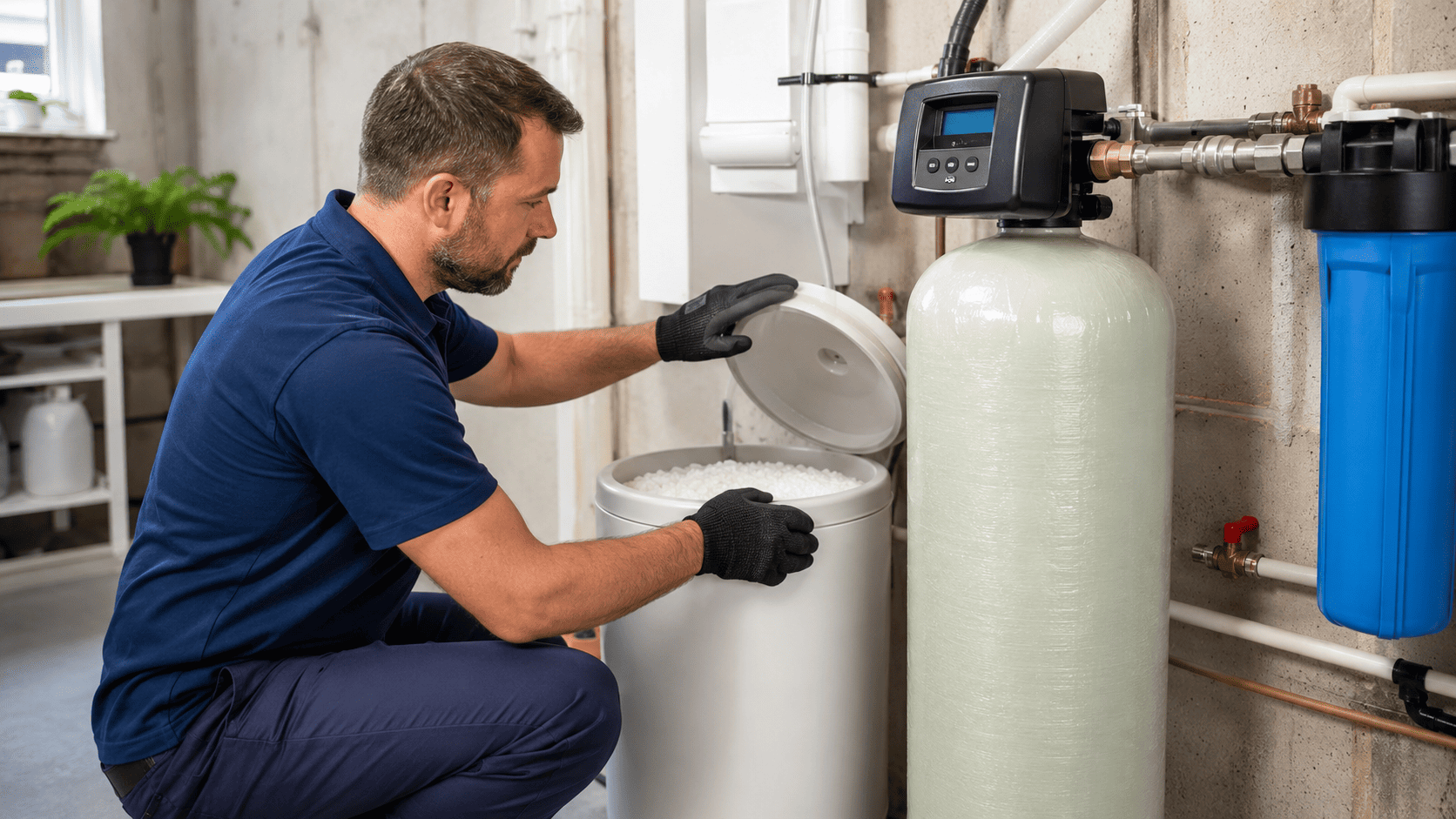
Salt plays a key role in the softening process because it helps the system regenerate and continue removing hardness minerals from your water. If the salt level gets too low, your softener may not work as effectively, and hard water symptoms can start coming back.
A good habit is to check the salt level about once a month. If it is low, refill it according to your system’s instructions. Small task, big difference, and much better than realizing something is off only after your faucets, dishes, or laundry start complaining in their own little ways.
You can also watch for signs like:
- salt sitting too low in the brine tank;
- water starting to feel harder than usual;
- soap or shampoo not lathering as well;
- laundry feeling rougher after washing;
- mineral spots returning on faucets or glassware.
2. Clean the Brine Tank
The brine tank can collect sediment, salt mush, or salt bridges over time. When that happens, the system may struggle to regenerate properly, even if it looks like there is enough salt inside.
Cleaning the brine tank every six months can help keep the system running smoothly. This is one of those water softener servicing tasks that helps avoid performance problems, reduce unnecessary strain, and keep the softener doing what it should: treating hard water before those minerals reach the rest of your home.
When cleaning or checking the brine tank, pay attention to:
- hardened salt crusts that block proper salt use;
- mushy salt buildup at the bottom of the tank;
- dirt, sediment, or residue inside the tank;
- unusual smells or discoloration;
- salt that does not seem to go down over time.
3. Inspect and Clean the Resin Bed
The resin bed is where the real softening work happens. It attracts and holds hardness minerals like calcium and magnesium so they do not continue moving through your plumbing system.
Over time, the resin can become coated with iron, sediment, or other impurities. When that happens, the system may lose efficiency, even if the tank, salt, and settings seem fine. Having the resin bed inspected once a year can help you know whether it needs cleaning, replacement, or professional attention.
This step matters because a tired resin bed can quietly reduce performance before the problem becomes obvious.
A resin bed may need attention if you notice:
- hard water symptoms returning after regeneration;
- water quality changing even when salt levels are correct;
- orange or reddish staining from iron;
- reduced softening performance over time;
- the system regenerating but not improving water feel.
4. Check for Leaks
Leaks can waste water, reduce system performance, and signal worn parts or loose connections. Check the valves, hoses, fittings, and visible connections around your softener from time to time.
If you notice dripping, pooling water, corrosion, or damp areas around the unit, do not ignore it. A small leak can become a bigger repair if it keeps going. This is where calling a water softener repair service makes sense, especially if the leak is near the control valve, brine tank, or main connections.
A quick visual check can help you spot:
- water pooling near the base of the unit;
- damp spots around hoses or fittings;
- corrosion near valves or connections;
- loose lines or visible cracks;
- changes in water pressure after the leak appears.
5. Set the Correct Regeneration Cycle
The regeneration cycle helps restore the system’s ability to remove hardness minerals. If the cycle is not set correctly, your softener may regenerate too often, wasting salt and water, or not often enough, allowing hard water to return.
Your regeneration settings should match your household’s water usage and the hardness level of your water. A family that runs laundry, showers, and dishes all day will not use water the same way as a one-person home. Shocking, I know, but the softener needs to know that too.
Following the manufacturer’s guidelines is a good start, but if you are unsure whether your settings are right, professional water softener servicing can help adjust the system for better performance.
Your regeneration cycle may need adjustment if:
- your household water use has changed;
- you recently changed the water softener settings;
- the system uses too much salt;
- hard water symptoms return between cycles;
- the system regenerates at inconvenient times;
- water quality feels inconsistent from day to day.
Regular water softener maintenance helps extend your system’s lifespan, protect your plumbing, improve water quality, and prevent mineral buildup before it creates more work around the house. Checking salt levels, cleaning the brine tank, inspecting the resin bed, watching for leaks, and setting the right regeneration cycle can all help your system work more efficiently.
Reviews of Global Cooling Services in Texas
Greg Martin
★★★★★
Robert and Brad were Quick and thorough inspecting all of our plumbing. Nice gentlemen, by the way. Drained both water heaters, which was a first. And changed the spout on the kitchen faucet, which was not a small job. We are extremely satisfied.
Wendy Figueroa
★★★★★
John was timely and worked quickly, quietly and efficiently. HE made no mess or noise. There was a small mixup involving what was to be done to my pipes, but the manager corrected my issue by honoring the original quote order and then offered a return technician the next day to correct the issue or a refund after assuring me a replacement wasn’t necessary, but acknowledged the mix up. That kind of honesty, integrity and transparency is MISSING from most companies large or small. This was my first experience with these guys, but it wont be the last, and I will be telling people! SOLID work from a SOLID company who stands by their work…. And I got a warranty on their installation! These guys are the bomb.com
Kevin Palamarchuck
★★★★★
I would like to highly recommend Global Cooling and Plumbing to you. My technician Reyes was very professional and knowledgeable. He cleaned out our water heater that had not been done in 5 years. He also checked our in-house and outside plumbing looking for leaks, Reyes also capped one of our water sprinkler pipes. The front office kept us informed and were very polite, understanding and great to work with. You won’t be disappointed when contacting Global Cooling and Plumbing for your needs.
Need Help With Water Softener Maintenance in Texas?
If your softener is not performing the way it should, Global Cooling & Plumbing can help you get it back on track with professional water softener maintenance, inspection, water softener servicing, and water softener repair service in Texas.
With more than 14 years of experience, our team helps Texas homeowners keep their water systems working properly, check for performance issues, and protect their homes from hard water problems before they turn into bigger repairs, mineral buildup, or daily “why is this happening again?” moments.
Call Global Cooling & Plumbing at 830-992-7887 to ask about water softener maintenance, or schedule your service directly through our website.
Click here to schedule your service.
FAQ About Water Softener Maintenance and Repair Service
How does water softener service help keep pipes cleaner?
Water softener service helps keep pipes cleaner by checking that your system is still reducing calcium and magnesium before they move through your plumbing. If the softener is not working properly, minerals can build up inside pipes, restrict water flow, and lead to scale or clog issues. Regular water softener maintenance and professional water softener servicing can help catch problems early and prevent mineral buildup before it affects your plumbing.
When should I schedule water softener servicing?
You should schedule water softener servicing if your water starts feeling hard again, your soap does not lather well, your salt level is not changing, or you notice mineral spots returning on fixtures or glassware. A service visit can help check the system settings, salt use, regeneration cycle, and key components before the issue becomes a bigger repair.
What does professional water softener servicing include?
Professional water softener servicing may include checking salt levels, inspecting the brine tank, testing water hardness, reviewing regeneration settings, checking valves and connections, and looking for signs of mineral buildup or system wear. The goal is to make sure your softener is still working efficiently and protecting your home from hard water problems.
How do I know if I need water softener repair service?
You may need a water softener repair service if the system is leaking, showing error codes, not using salt, not regenerating, leaving water feeling hard, or causing the brine tank to hold too much or too little water. These signs usually mean the system needs more than a basic check.
Can water softener repair service prevent bigger plumbing problems?
Yes. A timely water softener repair service can help restore the system before hard water minerals start moving through your plumbing again. When the softener works properly, it can help prevent mineral buildup in pipes, faucets, showerheads, water heaters, and other water-using appliances.
Is water softener servicing better than waiting for a repair?
In many cases, yes. Regular water softener servicing helps catch small issues early, while repair usually happens after something has already gone wrong. Servicing can help keep the system efficient, reduce the chance of sudden problems, and avoid that lovely surprise where your water softener quietly stops doing its job.